Publications
2025
-
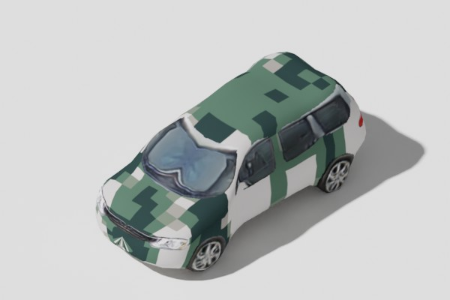 Texture- and Shape-Based Adversarial Attacks for Overhead Image Vehicle DetectionMikael Yeghiazaryan, Sai Abhishek Siddhartha Namburu, Emily Kim, and 4 more authorsIn 2025 IEEE International Conference on Image Processing (ICIP), Sep 2025
 -
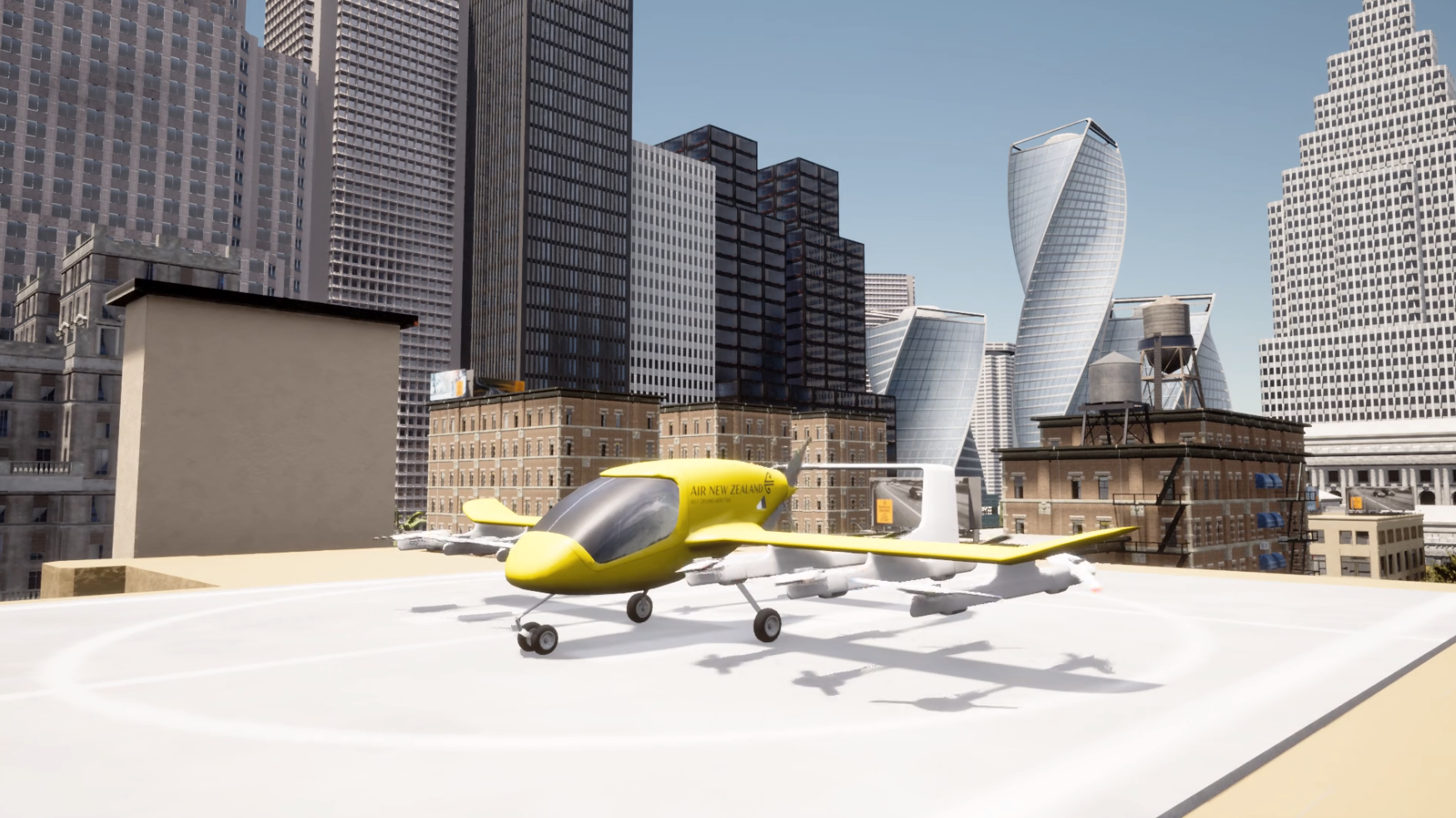 AirTaxiSim: A Simulator for Autonomous Air TaxisAyoosh Bansal*, Mikael Yeghiazaryan*, Hyung-Jin Yoon*, and 10 more authorsJun 2025Authors indicated with * contributed equally.
The rapid advancements in air mobility vehicles is paving the way for air taxis to become a viable mode of public transportation. The next technological frontier for air taxis is fully autonomous operation. Developing safe and efficient autonomous control for air taxis presents greater challenges than for ground vehicles due to the inherent instability of aerial vehicles. Therefore, simulation solutions for autonomous air taxis will play a crucial role in accelerating their development and eventual safe deployment. This paper introduces AirTaxiSim, an end to end simulation framework for autonomous air taxis. AirTaxiSim is designed to model and analyze the complexities of autonomous air taxi operations in dynamic and cluttered urban environments. AirTaxiSim integrates high fidelity physical models of vertical take-off and landing air vehicles in photo-realistic urban environments. The primary purpose of AirTaxiSim is to evaluate the safety, performance, and efficiency of autonomous air taxi services, across a variety of scenarios, including dangerous edge cases. AirTaxiSim also provides methods for generating datasets and establishing benchmarks for autonomous air taxis. This paper describes the simulator’s construction, functionalities, and some of the use cases, providing critical information to facilitate its use in advancing autonomy in aerial vehicles.
-
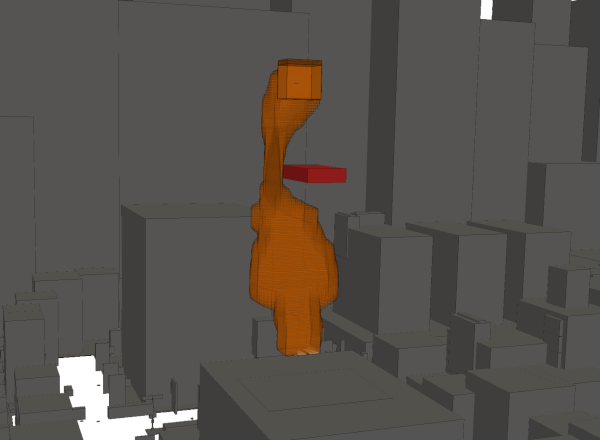 Verification and Validation of a Vision-Based Landing System for Autonomous VTOL Air TaxisAyoosh Bansal*, Duo Wang*, Mikael Yeghiazaryan*, and 9 more authorsJan 2025Authors indicated with * contributed equally.
Autonomous air taxis are poised to revolutionize urban mass transportation. A key challenge inhibiting their adoption is ensuring the safety and reliability of the autonomy solutions that will control these vehicles. Validating these solutions on full-scale air taxis in the real world presents complexities, risks, and costs that further convolute the challenge of ensuring safety and reliability of these autonomous vehicles. Verification and Validation (V&V) frameworks play a crucial role in the design and development of highly reliable systems by formally verifying safety properties and validating algorithm behavior across diverse operational scenarios. Advancements in high-fidelity simulators have significantly enhanced their capability to emulate real-world conditions, encouraging their use for validating autonomous air taxi solutions, especially during early development stages. This evolution underscores the growing importance of simulation environments, not only as complementary tools to real-world testing but as essential platforms for evaluating algorithms in a controlled, reproducible, and scalable manner. This work presents a V&V framework for a vision-based landing system for air taxis with vertical take-off and landing (VTOL) capabilities. Specifically, we use Verse, a tool for formal verification, to model and verify the safety of the system by obtaining and analyzing the reachable sets. To conduct this analysis, we utilize a photorealistic simulation environment. The simulation environment, built on Unreal Engine, provides realistic terrain, weather, and sensor characteristics to emulate real-world conditions with high fidelity. To validate the safety analysis results, we conduct extensive scenario-based testing to assess the reachability set and robustness of the landing algorithm in various conditions. This approach showcases the representativeness of high-fidelity simulators, offering an effective means to analyze and refine algorithms before real-world deployment.


